Introduction
A few weeks ago, I thought the hardest part of building an archive would be finding things worth putting inside it.
I was very wrong.
Apparently, finding things is the easy part. The harder question is figuring out why a photograph of my grandfather holding me, a handwritten recipe, a recording of a Vietnamese market, and a photograph of an altar deserve to sit beside refugee records and oral histories in something I am confidently calling an archive. At some point, I realized that question is basically the project.
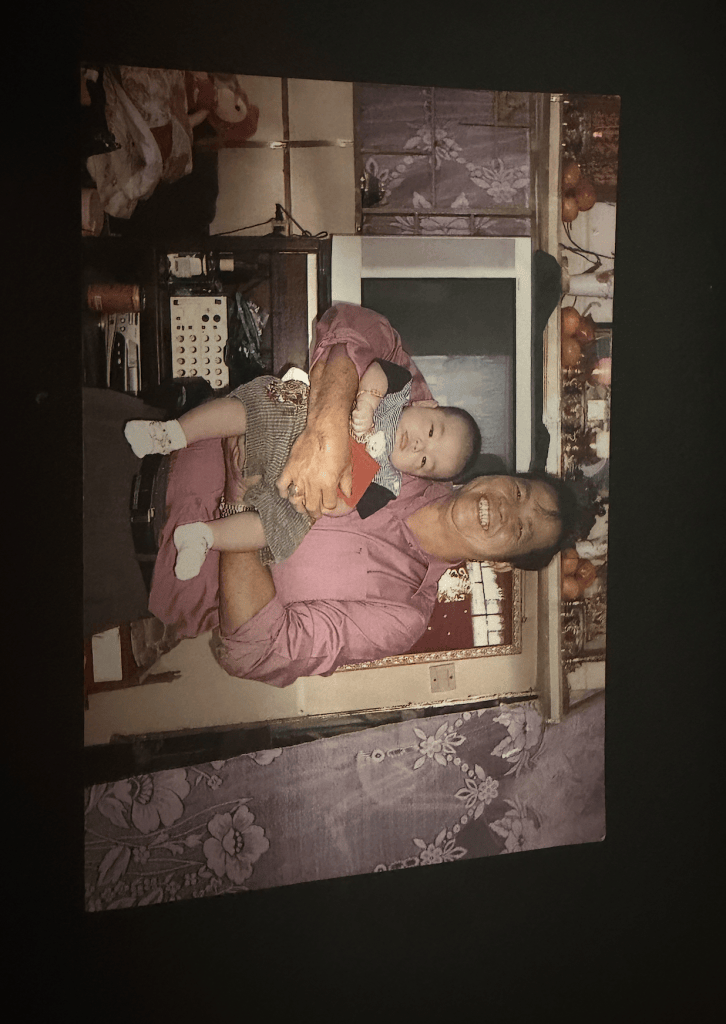
Traditional immigration archives are remarkably good at answering certain questions. When did someone arrive? Where did they come from? Where were they processed? What was their legal status?
Those questions matter enormously. But they aren’t the only questions worth asking.
What did home sound like? What food survived the journey? Which traditions followed people across an ocean? What does it mean when your grandmother’s recipe survives, but nobody remembers exactly why she made it that way?
Between Two Homes argues that Vietnamese immigration is archived not only through the documents produced when people cross borders, but through the ordinary things that continue traveling long after that crossing is over. Photographs, recipes, voices, food, celebrations, and rituals preserve forms of knowledge that official records often cannot.
I am not arguing that we should throw away the paperwork. That would make immigration historians very unhappy, and reasonably so. I want these archives to sit beside one another.
Michelle Caswell’s Archiving the Unspeakable helped me understand why that distinction matters. Caswell demonstrates that records do not simply reflect reality. Their creation can actively classify people and determine how institutions understand them. In her study of the Tuol Sleng photographs, people could become “types rather than individuals, objects spoken for rather than human beings with voices.” My context is obviously radically different, but the archival lesson stayed with me: who creates a record, what they record, and how they describe someone fundamentally shapes what future audiences are able to know.
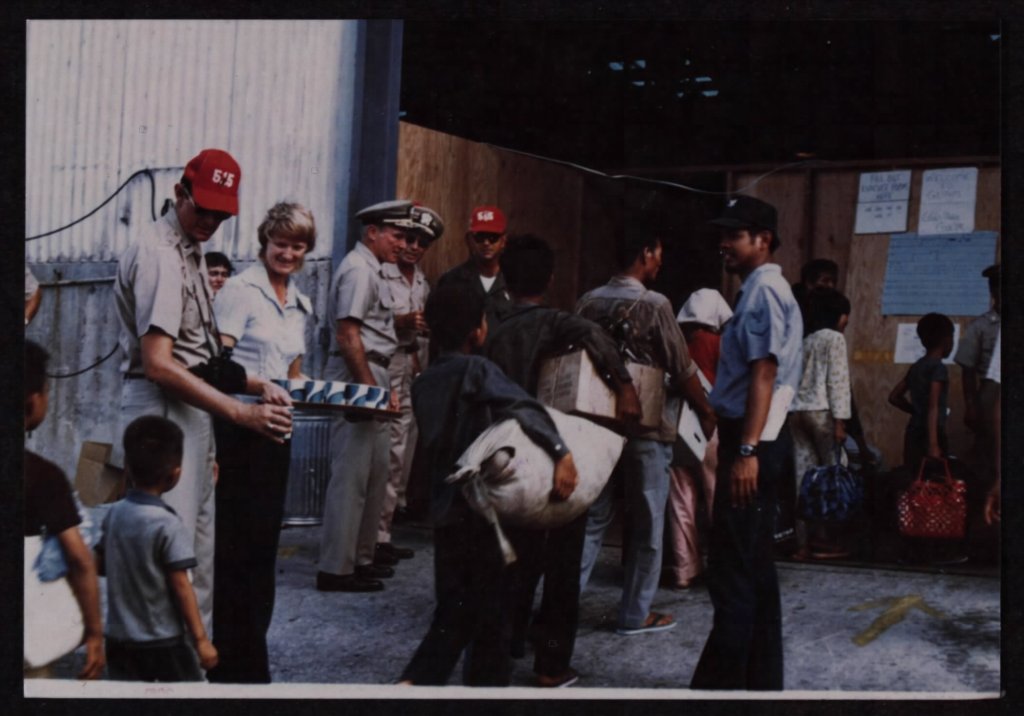
That is why this archive deliberately moves between two scales: my family’s experiences and selected Vietnamese immigrant and refugee experiences preserved in public collections. My story cannot represent Vietnamese immigration as a whole. Eight objects definitely cannot. Instead, I use personal materials as one point of entry and place them beside community and institutional records to look for connections, differences, and silences.
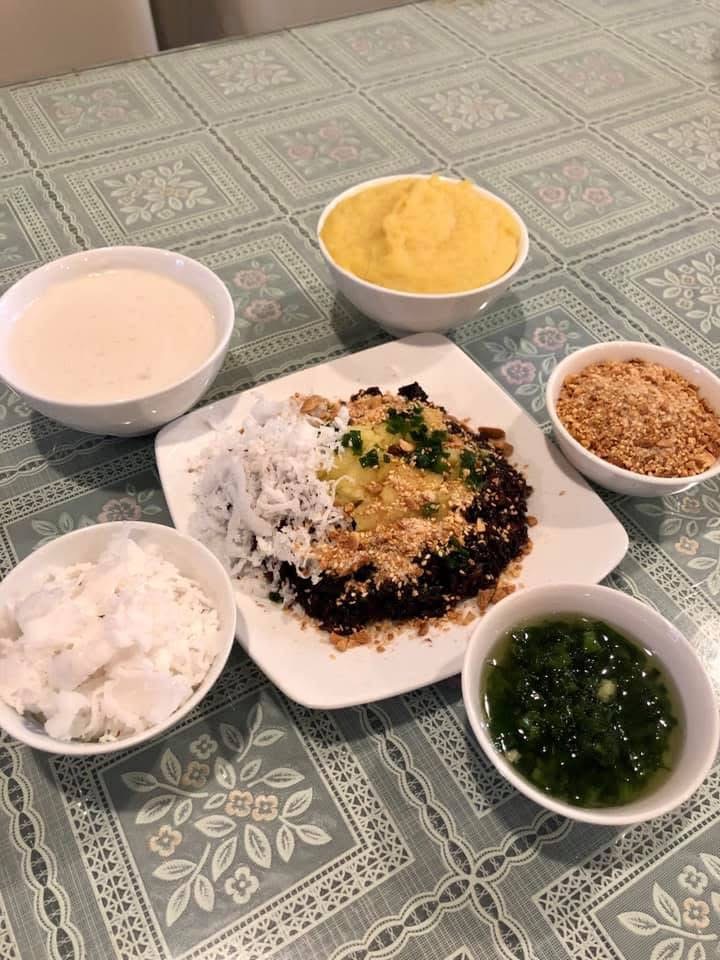
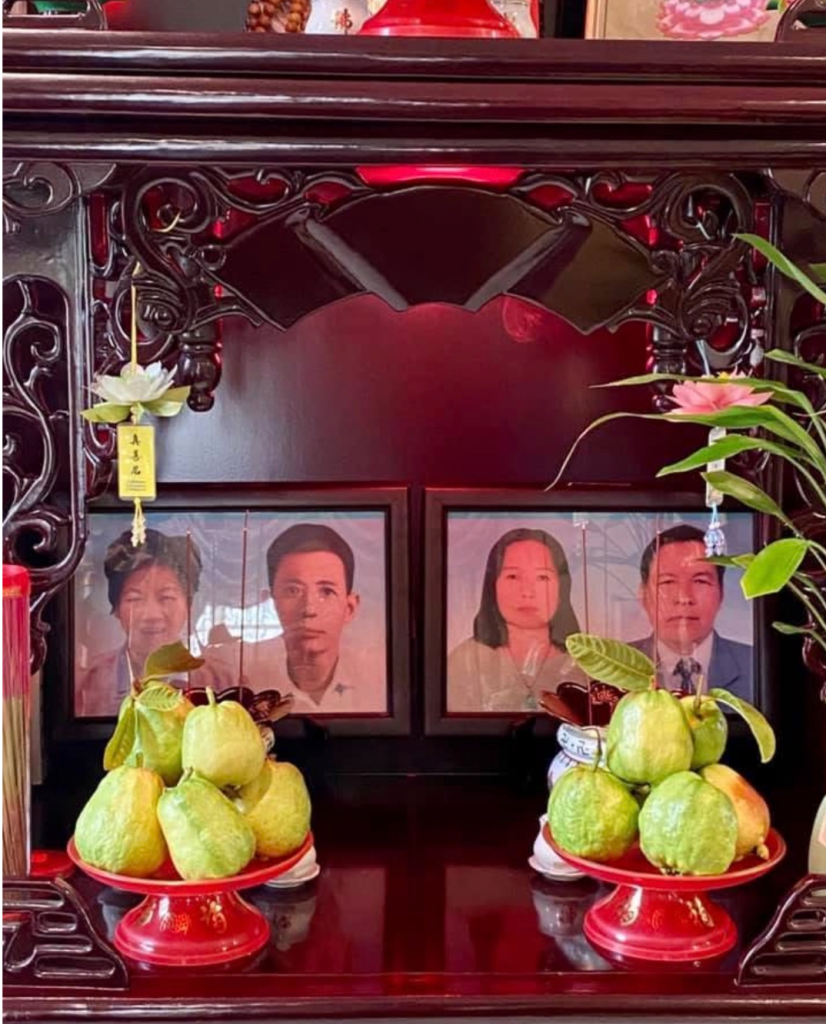
The archive is organized around four themes: Arrival & the Official Record, Language & Voice, Food & Memory, and Ritual & Belonging. Each pairs different ways of knowing. A family photograph sits beside an institutional refugee photograph. A contemporary Vietnamese soundscape meets an oral history remembering Saigon. My grandmother’s handwritten recipe sits beside testimony about rice and survival in a refugee camp. Finally, a public Vietnamese celebration leads back into the home through my family’s ancestor altar.
Methodologically, that means combining oral history, material culture, sound, visual analysis, community archiving, and metadata design rather than allowing any single kind of record to tell the story alone. Just as importantly, I use juxtaposition as a method, placing personal objects beside institutional and community records to ask what each preserves, what each leaves out, and what becomes visible only when they are read together.
María Eugenia Cotera gave me language for what I was trying to do. Her idea of “fleshing the archive” approaches it as a “site of dialogue and encuentro (encounter)” rather than a stable object waiting for scholarly interpretation. That feels especially appropriate here. A recipe becomes meaningful because someone still cooks it. A photograph becomes meaningful because somebody points at it twenty years later and starts telling a story nobody else remembers correctly.
The archive happens in that interaction.
Projects like SAADA and Densho also shaped how I approached the public-facing side of the archive: not as a database visitors simply search, but as a space where photographs, testimony, and everyday materials can lead visitors into interconnected stories.
Anne Gilliland’s work on metadata pushed this further. Gilliland describes metadata as a kind of “Rosetta stone” capable of helping transform information objects into knowledge. That made me think about what conventional metadata might miss. Alongside dates, creators, sources, and formats, I organize these objects through themes and ways of knowing because people rarely remember their lives as database queries. Sometimes we remember through belonging. Separation. Survival. Food. A voice.
That is also why I’m building this for two public audiences. The first is Vietnamese and Vietnamese American families who may recognize versions of these experiences in their own homes. The second is anyone who understands immigration mostly through wars, laws, statistics, refugee numbers, or paperwork. I want this audience to encounter immigration at a more intimate scale: not simply as the movement of populations, but as the movement of memories, habits, relationships, and ideas of home.”
And for scholars in digital humanities and archival studies, this project asks what changes when lived, sensory, embodied, and familial knowledge is treated as archival evidence rather than supplemental decoration. For migration studies and Asian American studies, it shifts attention from immigration as a single moment of border crossing toward what happens afterward: how memory, language, food, and ritual continue to shape identity across generations. These fields approach the same history from different directions, and I want this archive to sit somewhere in the middle, asking what becomes visible when their ways of knowing are allowed to speak to one another.
Why does any of this matter? Because when these everyday forms of knowledge disappear, we lose more than objects. We lose the context that explains how people made homes, maintained relationships, adapted traditions, and understood themselves after migration. Once that context disappears, no government record can reconstruct it for us.Ultimately, I want this project to make visitors do something dangerously inconvenient. Ask questions.
Ask your parents why they kept that photograph. Ask your grandparents how they made the dish nobody wrote down. Record the story you’ve heard fifteen times anyway. Find out why that completely ordinary object has survived three moves and twenty years. And when they tell you, preserve the answer. Write it down. Record their voice. Add the story to the photograph. Pass it along.
Because someday, the person who knows the answer might not be there to explain it.
And if this project makes one person look around their home and realize that something they have always considered ordinary is actually carrying a history, then I think the archive has done its job.
Maybe the most important archives don’t begin when something enters a museum.
Sometimes they begin when someone finally thinks to ask: “Why did we keep this?”
“How To Use” Guide
I tried to design this archive around one very scientific usability test: Could I send it to my grandma without immediately receiving a phone call asking where everything is? Hopefully, yes.
You do not need to know anything about digital humanities, archival theory, or Vietnamese immigration before exploring Between Two Homes. There is also no “correct” order. This archive is meant to be wandered through, because memory rarely arrives chronologically anyway.
The collection is organized around four themes: Arrival & the Official Record (Artifacts 1 and 2), Language & Voice (Artifacts 3 and 4), Food & Memory (Artifacts 5 and 6), and Ritual & Belonging (Artifacts 7 and 8). Each theme deliberately pairs something from my personal life with a documented story or object from a broader Vietnamese immigrant or refugee collection. That juxtaposition is intentional. I didn’t want my family’s experience to stand in for Vietnamese immigration as a whole, but I also didn’t want the archive to become so general that the people inside it disappeared. Moving between the personal and the documented gives the collection a balance between intimate memory and broader historical experience, while also letting each complicate the other. You can follow the themes from beginning to end, starting with Artifact 1, or simply begin with whatever catches your attention. Memory rarely follows a perfectly organized path anyway, so I don’t expect you to either.
Each object includes contextual information explaining what it is, where it came from, and why it matters. Pay attention to the photographs, but also listen to the recordings linked, read the testimony, examine the recipe, and explore the metadata. You’ll also notice tags attached to each object that identify its broader themes and help reveal connections across the collection. Alongside those tags, each item includes a narrative description that goes beyond simply identifying the object to explain how it connects to memory, migration, and the larger argument of the archive. Different objects preserve different ways of knowing, and part of the point is noticing what one medium can communicate that another cannot. Sometimes the most interesting part is not the object by itself, but what starts to appear when you connect it to everything around it.
This archive is also deliberately small. With eight objects, it obviously cannot represent something as complicated and diverse as Vietnamese immigration. It is a proof of concept, a starting point for what could eventually become a much larger community archive incorporating more families, generations, oral histories, languages, places, and perspectives. Think of this version less as the finished archive and more as the first box someone finally decided to open.
Most importantly, wander.
Click something because it looks interesting. Follow a connection you did not expect. Get slightly distracted. Apparently that is how half of this project happened anyway.
And, of course, At the link below, you can browse the complete Omeka archive and explore all eight objects individually.
Omeka: https://jwxngs.omeka.net/items/browse
Data Dictionary
I used to think metadata was the part of an archive where you put the date, photographer, and file type and then congratulated yourself for being organized.
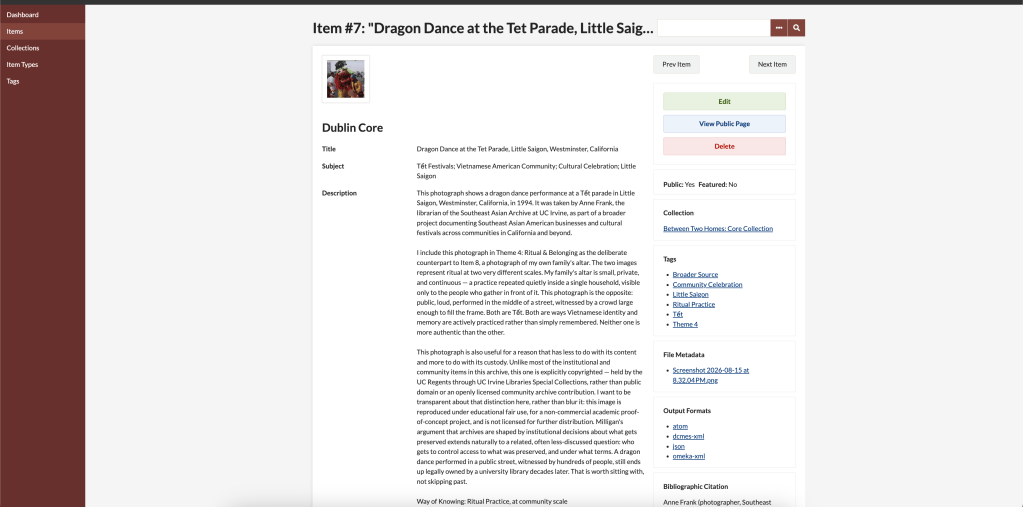
Unfortunately, Gilliland ruined that simplicity for me (jk). The more I worked on this archive, the more I realized that metadata does not simply describe an object. It quietly tells visitors how to understand it. So while Between Two Homes uses standard Dublin Core fields, the fields I cared about most are the ones where description becomes interpretation.
The biggest intervention is Emotion/Theme. Traditional metadata can tell me that something is a photograph from 2007. It cannot tell me that my family remembers it through separation, belonging, survival, or celebration. Those categories are intentionally subjective. Memory is subjective too. Interestingly, some institutional objects receive no emotional tag at all. That absence matters. It makes visible how efficiently a record can document people while saying almost nothing about what they felt.
I also created Way of Knowing to identify what each artifact contributes: Visual Memory, Testimony, Sonic Memory, Embodied Knowledge, Ritual Practice, and others. No single source gets to explain immigration by itself. That is basically the point.
Description works similarly. Instead of pretending I am a perfectly neutral archivist hovering somewhere above the collection, I use short narrative descriptions to explain why objects are paired and what their relationship might reveal. Cotera’s idea of “fleshing the archive” helped me see description as a place for encounter rather than just identification.
I also resisted inventing certainty. Unknown dates remain approximate. Unknown photographers remain unknown. Vietnamese handwriting and testimony remain visible in Vietnamese where meaningful. Rights distinguish family permission, public domain, copyright, and educational fair use rather than pretending everything online is magically free.
Finally, Relation connects every artifact to its counterpart.
Because ultimately, my metadata is making the same argument as the archive itself:
An object tells us something. Its relationships tell us much more.
FAQ’s
Who is this archive for?
I built this archive with two audiences in mind.
The first is Vietnamese and Vietnamese American families, especially people who might recognize pieces of their own lives in these objects. Maybe their family also has a recipe nobody measures correctly, photographs whose exact dates have been forgotten, traditions that somehow survived migration, or stories they have heard so many times they stopped thinking of them as history. I hope this archive encourages those visitors to look at ordinary things differently and, perhaps, ask where they came from before that knowledge disappears.
The second audience is anyone whose understanding of Vietnamese immigration comes mostly from wars, refugee statistics, laws, and government records. Those histories matter, but they can make immigration feel like an event that ends once someone crosses a border. I want this archive to bring that history down to a more human scale.
More broadly, I hope scholars and students in digital humanities, archival studies, migration studies, and Asian American studies can use this project as a small experiment in what happens when family memory, sound, food, emotion, and ritual are treated as legitimate forms of archival knowledge.
You do not need to be Vietnamese or an archivist to belong here. You just need to have something worth remembering.
What other projects out there that I can use to further my exploration?
One thing this project has taught me is that no archive really exists by itself. Every decision I made, from treating a recipe as historical evidence to worrying excessively about metadata, came from conversations other scholars, archivists, and communities were already having.
So rather than ending with a bibliography that basically says, “Here are some books. Good luck,” I wanted to leave a reading list explaining why these works mattered to me and where you might want to wander next.
Scholarship
Michelle Caswell, Archiving the Unspeakable: Silence, Memory, and the Photographic Record in Cambodia (2014).
Caswell’s study of the Tuol Sleng photographs shaped one of my central concerns: recording someone does not automatically mean preserving them humanely. Archives can transform people into categories, evidence, or statistics while stripping away the voices that made them individuals. It helped me think more carefully about why Between Two Homes constantly moves between institutional documentation and personal memory.
Michelle Caswell, “Hannah Arendt’s World: Bureaucracy, Documentation, and Banal Evil” (2010).
If the book feels like a commitment, start here. Caswell examines how seemingly ordinary bureaucratic documentation can participate in systems of harm through thoughtlessness. That idea stayed with me while looking at refugee-processing records. A document does not have to be malicious to flatten someone’s life into a category.
Anne J. Gilliland, “Setting the Stage,” in Introduction to Metadata.
Gilliland is partially responsible for why I can no longer look at a metadata field without overthinking it. Her description of metadata as a kind of “Rosetta stone” helped me understand that description does more than organize information. It shapes what future visitors can discover and understand. My Emotion/Theme, Way of Knowing, Description, and Relation choices grow directly from that realization.
María Eugenia Cotera, work on “fleshing the archive.”
Cotera’s idea of turning archives into spaces of dialogue and encuentro, or encounter, might be the concept closest to the heart of this project. It encouraged me to place objects into conversation rather than treat them as isolated evidence. A recipe becomes more interesting when somebody remembers who taught it to them. A photograph changes when someone says, “Wait, I remember what happened right after this.”
Elijah Gaddis, work on everyday objects and material culture.
Gaddis helped me take ordinary things seriously. Objects accumulate meaning because people continue using, remembering, and reinterpreting them. If you’re wondering why an altar or handwritten recipe belongs beside institutional records, start here.
Public-Facing Projects Worth Getting Lost InViet Stories: Vietnamese American Oral History Project, UC Irvine.
This is the most directly relevant next stop. Viet Stories preserves Vietnamese American life histories through testimony, including materials used in my archive. It demonstrates why hearing someone’s voice can reveal something even the best transcript cannot.
Viet Stories: Vietnamese American Oral History Project, UC Irvine.
This is the most directly relevant next stop. Viet Stories preserves Vietnamese American life histories through testimony, including materials used in my archive. It demonstrates why hearing someone’s voice can reveal something even the best transcript cannot.
South Asian American Digital Archive (SAADA).
SAADA heavily influenced how I imagined discovery. Its materials feel interconnected rather than imprisoned in separate database entries. It helped convince me that an archive should encourage wandering, curiosity, and unexpected connections.
Densho.
Densho’s preservation of Japanese American incarceration testimony taught me to think about voice itself as evidence: pauses, hesitation, laughter, silence, and emotion. Sometimes how someone remembers matters as much as what they remember.
StoryCorps.
Probably the easiest place to start. StoryCorps demonstrates that archiving does not require climate-controlled boxes or an advanced degree.
Sometimes an archive begins with a much simpler technology: A person sitting across from another person and asking,
“Can you tell me that story again?”
Can I get a visualization of the archive?
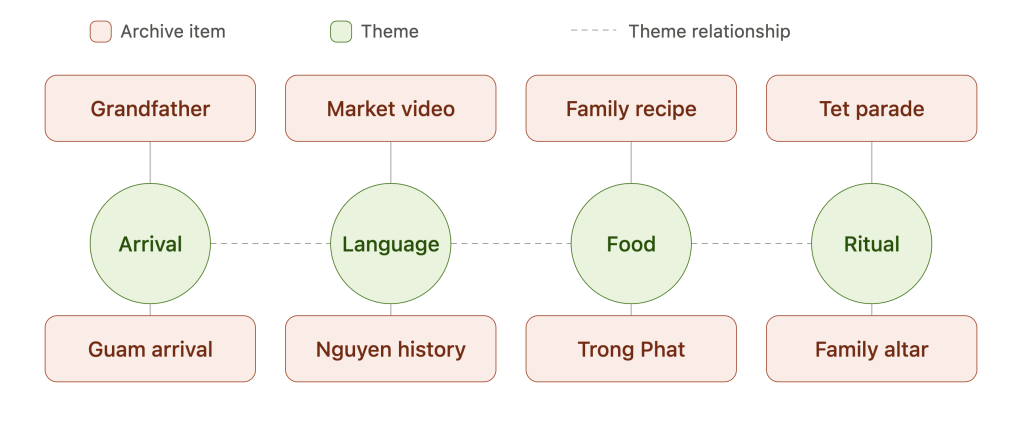
Yes! And thankfully, it looks slightly more organized than the inside of my head while I was building this project. The diagram above maps all eight artifacts across the archive’s four central themes: Arrival, Language, Food, and Ritual. Each green circle represents one of those themes, while the surrounding boxes represent the individual artifacts connected to it. At first glance, the structure is pretty simple. Two artifacts. One theme. Repeat four times.
But that symmetry is intentional.
Each theme places a personal or familial artifact in conversation with a broader Vietnamese immigrant, refugee, or community record. My photograph with my grandfather sits across from the Guam refugee-arrival photograph. The local market recording is paired with Nguyen’s oral history. My family’s recipe is read alongside Trong Phat’s testimony about food and displacement. Finally, the public Tết parade photograph sits beside my family’s private ancestor altar.
The point isn’t to suggest that these pairs are equivalent. They aren’t. My family’s experience cannot stand in for Vietnamese immigration as a whole, just as one institutional photograph cannot explain the experiences of every refugee it depicts.
Instead, the visualization shows juxtaposition as a method.
The dashed line connecting Arrival → Language → Food → Ritual is especially important. These categories are useful for organizing an archive, but lived experience doesn’t actually stay inside neat boxes. Arrival affects language. Language carries memories of food. Food becomes ritual. Ritual creates belonging. Before long, everything starts touching everything else, which is inconvenient for databases but fairly normal for human beings.
So this map below is less a family tree than a map of relationships. It visualizes the central idea behind Between Two Homes: no artifact tells the story alone. The meaning emerges somewhere in between.
How will this archive be developed?
Right now, Between Two Homes is intentionally a proof of concept. Eight artifacts cannot capture Vietnamese immigration, and I don’t think eighty could either. If anything, building this small version has shown me just how many stories are still sitting in photo albums, kitchen drawers, old Facebook posts, and people’s memories waiting for someone to ask about them.
The next stage would expand beyond my family’s experiences and the existing public collections represented here. I would invite Vietnamese and Vietnamese American families to contribute their own photographs, recipes, recordings, objects, and stories, allowing the archive to become increasingly community-driven rather than primarily curated through my perspective. I would also expand the oral-history component, incorporate more Vietnamese-language materials, and represent different generations, migration periods, geographic communities, and experiences that these eight artifacts cannot capture.
The metadata would grow with the collection too. Themes like Belonging, Separation, Survival, Celebration, and Nostalgia could eventually become searchable pathways, allowing visitors to explore the archive through emotional connections rather than chronology alone.
Most importantly, I don’t imagine a larger version becoming a more “complete” archive. There is no complete version. I imagine it becoming a more plural one, where every new contribution complicates the story that came before it.
How was accessibility considered in this archive?
Accessibility was something I wanted to treat as part of the archive itself, rather than the digital equivalent of remembering the wheelchair ramp after the building is finished.
Several decisions reflect that goal. Images are accompanied by descriptive captions and contextual metadata, so understanding an artifact does not depend entirely on seeing it. Audio and oral-history materials are paired with written descriptions or transcripts when available, allowing visitors to engage with their content without relying exclusively on sound. I also kept navigation relatively simple, organizing eight artifacts into four clearly labeled themes rather than asking visitors to solve a digital scavenger hunt just to find a recipe.
Language presented another accessibility question. Vietnamese words and original materials are preserved where their language carries meaning, but English context is provided so that visitors do not need to speak Vietnamese to understand why an artifact matters. The goal is accessibility without translating away the cultural specificity I am trying to preserve.
That said, accessibility is an ongoing process, not a box I can confidently check “done.” A future version would include more complete transcripts, Vietnamese translations, stronger screen-reader testing, and community feedback from users with different accessibility needs. An archive becomes more meaningful when more people can actually enter it.
What happens when this archive is no longer actively maintained?
Eventually, every digital project reaches the slightly uncomfortable question nobody likes asking while building it: what happens when I stop updating this?
If Between Two Homes is eventually sunsetted, my goal would not be to simply delete the website and hope someone saved a screenshot. Instead, the archive would transition from an active project into a preserved record of the project at a particular moment in time.
Before ending active development, I would export and back up the Omeka metadata, original media files, written interpretations, citations, and WordPress exhibit in multiple formats and locations. Wherever possible, personal photographs, recipes, and recordings would also remain preserved separately from the website itself. The public site could remain available as a static exhibit, but it would be clearly labeled as no longer actively maintained so visitors understand what they are seeing.
There is something strangely appropriate about planning for an archive’s ending.
This entire project is about impermanence, memory, and what survives after people stop actively tending to something. A digital archive should not pretend it is somehow exempt from that problem.
Sunsetting, then, would not mean pretending Between Two Homes lasts forever.It would mean making thoughtful decisions about what should remain after it doesn’t.
What are some limitations of this archive?
The most obvious limitation of Between Two Homes is its size. Eight artifacts can start a conversation about Vietnamese immigration, but they definitely cannot finish one. This archive is a proof of concept, not a representative account of Vietnamese immigrant experience. My own family materials shape several of its themes, while the broader artifacts come from a small number of public collections. That means entire experiences are missing: different generations, regions of Vietnam, socioeconomic backgrounds, migration periods, political perspectives, and relationships to Vietnamese American identity. I also recognize that my decision about what belongs here is itself an exercise of archival power.
There are technical limitations too. Some materials depend on external archives, links, and platforms that I do not control. Oral histories can provide extraordinary depth, but excerpts inevitably remove parts of a much longer story. Translation presents another problem because Vietnamese words, memories, and cultural meanings do not always move neatly into English.
But I don’t necessarily think incompleteness makes the archive unsuccessful. If anything, this project has convinced me that every archive is incomplete. Something is always absent, forgotten, inaccessible, or never recorded in the first place.
The important thing is not pretending those gaps don’t exist. It is making them visible enough that someone else might eventually help fill them.
Work Cited
Caswell, Michelle. Archiving the Unspeakable: Silence, Memory, and the Photographic Record in Cambodia. University of Wisconsin Press, 2014.
Caswell, Michelle. “Hannah Arendt’s World: Bureaucracy, Documentation, and Banal Evil.” Archivaria, no. 70, 2010, pp. 1–25.
Cotera, María Eugenia. “Fleshing the Archive: Reflections on Chicana Feminist Knowledge Practice.” Chicana/Latina Studies, vol. 15, no. 2, 2016, pp. 78–99.
Courpasson, David, and Ignasi Martí. “Collective Ethics of Resistance: The Organization of Survival in the Warsaw Ghetto.” Organization, vol. 26, no. 6, 2019, pp. 853–872.
Densho. Densho Digital Repository. Densho.
Ding, Yi. “Is Creative Commons a Panacea for Managing Digital Humanities Intellectual Property Rights?” Information Technology and Libraries, vol. 38, no. 3, 2019, pp. 34–48.
Gaddis, Elijah. Gruesome Looking Objects: A New History of Lynching and Everyday Things. Cambridge University Press, 2023.
Gilliland, Anne J. “Setting the Stage.” Introduction to Metadata, edited by Murtha Baca, Getty Research Institute.
Rosenblum, Brian, et al. The Public Digital Humanities Institute: Supporting Academic & Community Collaborations in the Digital Humanities. Institute for Digital Research in the Humanities, University of Kansas, 2024.
South Asian American Digital Archive. SAADA.
StoryCorps. StoryCorps.
University of California, Irvine. Southeast Asian Archive. UCI Libraries.
University of California, Irvine. Viet Stories: Vietnamese American Oral History Project. Vietnamese American Oral History Project.
Archival Materials Used in Between Two Homes
“Memories of Saigon in the Early Days.” Viet Stories: Vietnamese American Oral History Project, University of California, Irvine. Calisphere.
Nguyen, Trong Phat. Oral history testimony concerning Camp Jubilee and food scarcity. Viet Stories: Vietnamese American Oral History Project, University of California, Irvine. Calisphere.
“Vietnamese Refugees Are Processed on Arrival at Naval Base Guam.” 1975. U.S. government photograph.
Vietnamese New Year/Tết celebration photograph. 1994. University of California Regents, Calisphere.
Wong Family Collection. Family ancestor altar photograph. Personal collection.
Wong Family Collection. Family recipe and prepared dish photographs. Personal collection.
Wong Family Collection. Photograph of grandfather and grandson before departure from Vietnam. Personal collection.
 joeywong2
