One thing I’ve realized over the past week is that I have probably been archiving my life long before I knew what the word archive actually meant.
Not in the museum sense, of course. I wasn’t carefully preserving centuries-old manuscripts or organizing historical records. My version of archiving looked more like refusing to delete old photos because “I might want them someday,” keeping every boarding pass from flights back to Vietnam, saving random notes on my phone at two in the morning, or taking way too many pictures of meals with my family because I had this irrational fear that one day I’d forget what those moments felt like.
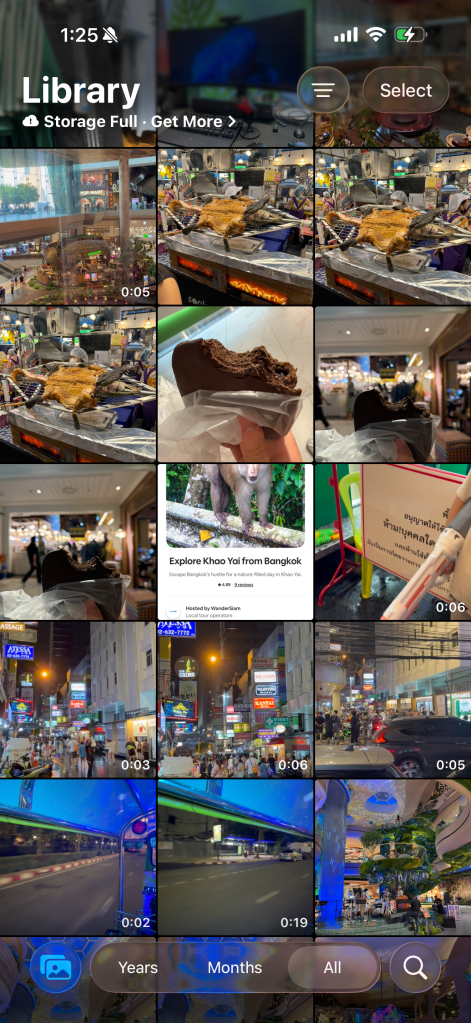
For years, I thought I was simply bad at letting things go. Now I’m beginning to think that maybe that’s just what it means to be human.
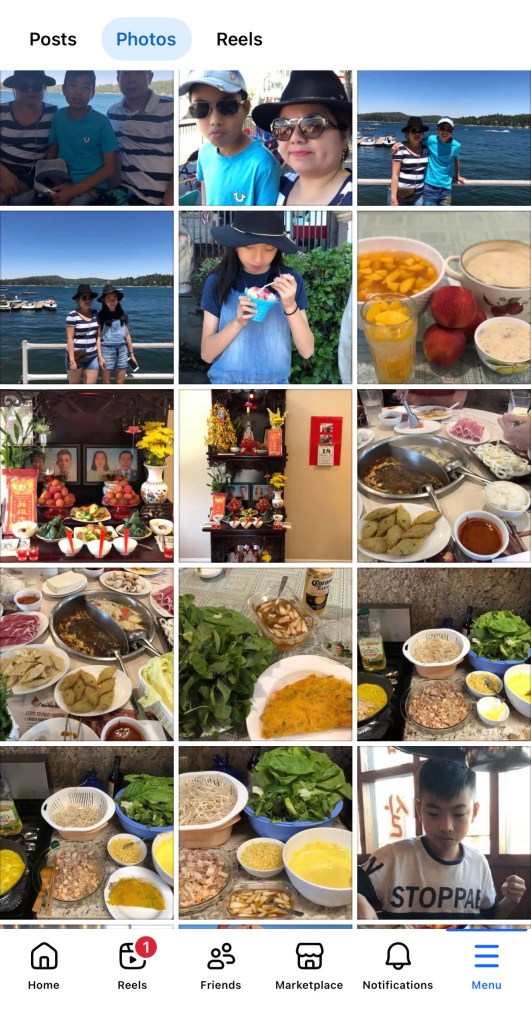
Looking back, I also realized that my mom had been doing exactly the same thing, only on a much larger scale. Since 2007, she’s documented nearly every part of our family’s life on Facebook. Birthdays. Family dinners. Road trips. Airport pickups. Vacations. Random weekends that didn’t seem important at the time. Growing up, I always wondered why she insisted on taking so many pictures. I used to joke that no meal could begin until she’d taken at least three photos of it.
Now, those photos have become something much more valuable.
Without realizing it, my mom had become our family’s first archivist.
Individually, each upload feels ordinary. Together, they tell the story of our family growing up, immigrating, changing, and building a new home over nearly two decades. They aren’t just pictures anymore. They’re evidence of who we were.
That realization completely changed how I approached this class.
Before this week, I honestly thought Digital Humanities was just another way of saying “technology applied to history.” It sounded interesting, but also pretty niche. The more I’ve read, though, the more I’ve realized it isn’t really about technology at all. Technology is simply the medium. The real subject has always been people. That leaves us with a much older question: What deserves to be remembered? That question feels surprisingly philosophical. I’ve started to see Digital Humanities less as using technology to study history and more as using technology to better understand what it means to be human. The digital tools matter, but only because they help us preserve, question, and reinterpret the stories that shape our identities.
Milligan argues that archives are never neutral repositories of information. They’re shaped by governments, institutions, and individuals making decisions about what deserves to be preserved and what quietly disappears. Once I started thinking about that, I couldn’t stop seeing it everywhere. Every family has stories that never get written down. Every country has histories that become celebrated while others slowly fade. Even within my own life, entire years exist only because someone happened to take a picture.
Memory, I’ve realized, is incredibly selective.
Sometimes I wonder whether forgetting is actually part of being alive.
If we remembered every conversation, every meal, every random Tuesday afternoon, would any memory actually matter?
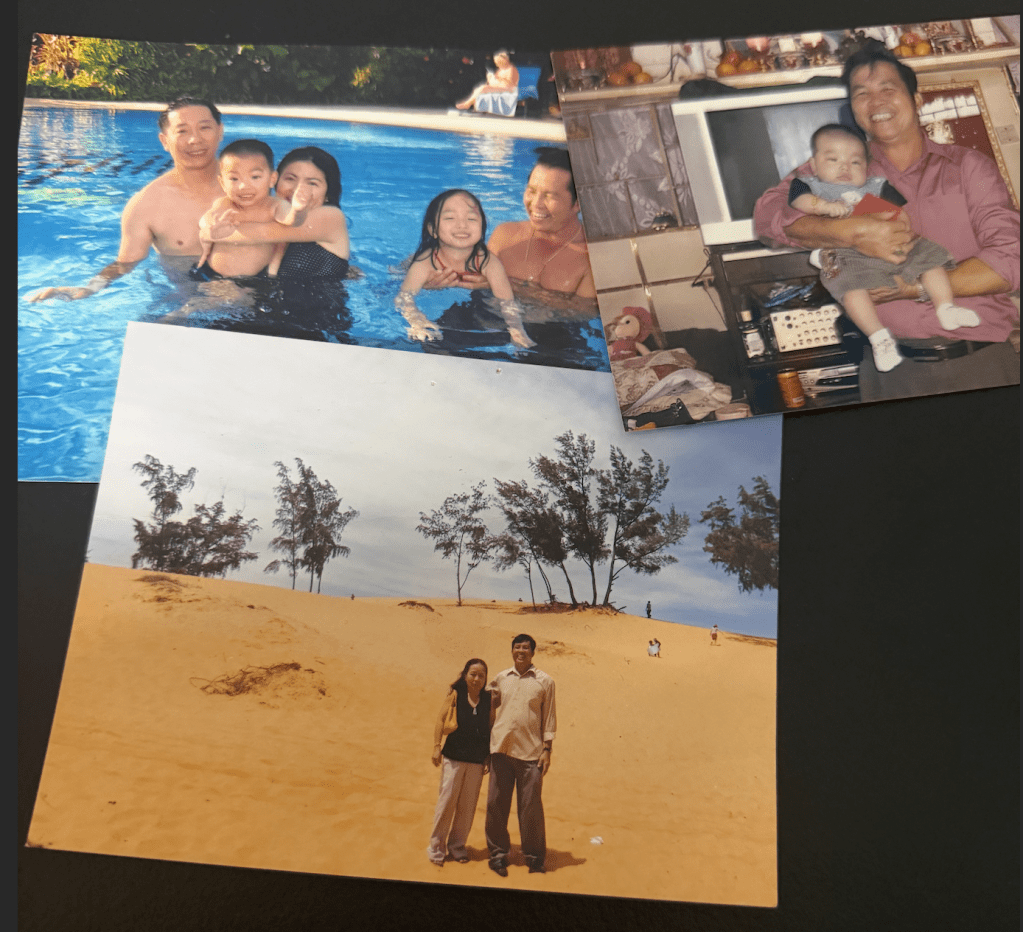
That thought inevitably brought me back to my own family.
I’m originally from Vietnam, and when my family immigrated to the United States, we obviously brought the important things: passports, documents, clothes, and whatever fit inside a few suitcases. But looking back, the things I remember most aren’t the official records. They’re the tiny moments that never appear on immigration paperwork.
I remember my grandparents speaking Vietnamese so quickly that I could barely keep up. I remember eating pho on plastic stools during visits back home. I remember my mom explaining why certain foods were only made during holidays. None of those memories have an official document attached to them. Yet somehow they feel far more important than the date printed on a visa.
If I were building an archive of my own life, I don’t think I’d start with paperwork. I’d start with sounds. The way my grandmother laughed. The background noise of scooters outside my apartment in Vietnam. The first time I realized English had become more natural than Vietnamese. Those moments don’t prove anything historically. But they explain who I became.
That’s probably why Wintjes’ The Archive in Pictures resonated with me so much. One of the biggest ideas I took away is that archives don’t have to be limited to documents sitting inside climate-controlled rooms. Landscapes, objects, photographs, oral histories, archaeological sites, and everyday possessions all preserve traces of human lives. And to me, I think that’s beautiful. It also feels strangely comforting.
As computer scientists, we’re trained to think about efficiency. Compress the file. Optimize the algorithm. Reduce storage. Eliminate redundancy. Humans seem determined to do the exact opposite. We tell the same family stories every Thanksgiving. We keep birthday cards we’ll probably never read again. We preserve blurry photographs simply because someone we love is smiling in them.
Objectively, none of this is efficient. Emotionally, it makes perfect sense. Maybe archives aren’t really about storing information. Maybe they’re about protecting meaning. That distinction feels important.
Callaway’s description of Digital Humanities as both a “welcome mat” and a “trapdoor” also stuck with me. As someone studying computer science, I expected the technical side of this course to feel familiar. Ironically, I’ve found the humanities side far more challenging.
Writing code usually has an answer.
People don’t.
There isn’t a sorting algorithm for nostalgia. No machine learning model can perfectly predict why one photograph becomes priceless while another quietly disappears into cloud storage.
That uncertainty is honestly what excites me most about this class.
For my project, I think I want to explore immigration and memory.
Not immigration through statistics, census data, or government records, although those certainly matter. I want to understand immigration through the objects people carry, the photographs families continue taking, the languages they slowly forget, and the traditions they accidentally reinvent. Because those are archives too.
I’ve also spent far too much of my life thinking about legacy.
Maybe that’s why Buddhism has always fascinated me. It constantly returns to ideas of impermanence and the temporary nature of life. If every person eventually disappears, perhaps archiving is our quiet rebellion against impermanence. We can’t stop time. We can’t prevent forgetting forever. But maybe we can leave behind enough traces that someone, somewhere, understands we were here.
Not because we were famous.
Not because we changed history.
But because we lived.
And somehow, I think that’s reason enough to remember. Maybe that’s what archives have been trying to do all along. Not preserve history for its own sake, but remind future generations that ordinary lives were extraordinary to someone.
 joeywong2